SideFX
Log inGet started
SideFX

Track symptoms, monitor medications, and understand patterns in your health data. For personal use only — not medical advice.

Product

  • Dashboard
  • Reports
  • Log Symptom
  • Drug Search

Company

  • About
  • Sign up
  • Sign in

Legal

  • Privacy Policy
  • Terms of Service

© 2026 GermFx. All rights reserved.

Privacy·Terms·Contact

Health News

Browse recent medication, recall, and health-related stories.

Page 39 of 51

Sort news

Indian Co Global Pharma Healthcare Recalls Eye Drops Over 55 Adverse Events In US - BW Healthcare World

Chennai-based drug firm Global Pharma Healthcare is voluntarily recalling all lots within expiry of their Artificial Tears Lubricant Eye Drops, distributed by /EzriCare, LLC- and Delsam Pharma, to the consumer level In the US, due to possible contamination, the USFDA on Thursday said in a statement. The top US regulator informed that the Centers for Disease Control and Prevention (CDC) alerted FDA to investigate infections possibly associated with the use of the artificial tears manufactured by Global Pharma Healthcare. The regulatory agency said that to date, there are 55 reports of adverse events including eye infections, permanent loss of vision, and one death with a bloodstream infection. The product was distributed Nationwide in the USA over the Internet.USFDA has also issued a risk statement for the product which reads that the "use of contaminated artificial tears can result in the risk of eye infections that could result in blindness".As per the media reports, two regulatory teams of CDSCO (Central Drug Standard Control Organisation and the State Drug Controller rushed to the company's plant in Chennai to inspect the matter on Friday. Artificial Tears (carboxymethylcellulose sodium) Lubricant Eye Drops, 10 mg in 1 mL, ½ fl oz (15 ml) bottle are used as a protectant against further irritation or to relieve dryness of the eye for the temporary relief of discomfort due to minor irritations of the eye, or to exposure to wind or sun. Global Pharma Healthcare is notifying the distributors of this product, Aru Pharma Inc. and Delsam Pharma and is requesting that wholesalers, retailers and customers who have the recalled product should stop use, the USFDA said.

bwhealthcareworld11/13/2026

Indian Co Global Pharma Healthcare Recalls Eye Drops Over 55 Adverse Events In US - BW Healthcare World

Chennai-based drug firm Global Pharma Healthcare is voluntarily recalling all lots within expiry of their Artificial Tears Lubricant Eye Drops, distributed by /EzriCare, LLC- and Delsam Pharma, to the consumer level In the US, due to possible contamination, the USFDA on Thursday said in a statement. The top US regulator informed that the Centers for Disease Control and Prevention (CDC) alerted FDA to investigate infections possibly associated with the use of the artificial tears manufactured by Global Pharma Healthcare. The regulatory agency said that to date, there are 55 reports of adverse events including eye infections, permanent loss of vision, and one death with a bloodstream infection. The product was distributed Nationwide in the USA over the Internet.USFDA has also issued a risk statement for the product which reads that the "use of contaminated artificial tears can result in the risk of eye infections that could result in blindness".As per the media reports, two regulatory teams of CDSCO (Central Drug Standard Control Organisation and the State Drug Controller rushed to the company's plant in Chennai to inspect the matter on Friday. Artificial Tears (carboxymethylcellulose sodium) Lubricant Eye Drops, 10 mg in 1 mL, ½ fl oz (15 ml) bottle are used as a protectant against further irritation or to relieve dryness of the eye for the temporary relief of discomfort due to minor irritations of the eye, or to exposure to wind or sun. Global Pharma Healthcare is notifying the distributors of this product, Aru Pharma Inc. and Delsam Pharma and is requesting that wholesalers, retailers and customers who have the recalled product should stop use, the USFDA said.

‘Nick Jonas found our sev delight with imli chutney spicy’: Goa restaurant owner recalls Priyanka Chopra’s visit

indianexpress11/13/2026

New social care plan aims to end the revolving door of care

People receiving care at home are hoped to benefit from more consistent and personalised support under government plans to re-organise social care around local communities. The Department of Health and Social Care (DHSC) has announced that local authorities will be encouraged to commission home care across small geographical areas, with one or two main providers serving each neighbourhood. The move aims to help people see the same care workers more regularly, to build stronger relationships and reduce the time workers spend travelling between appointments. Guidance and toolkits will be published in Spring 2027 to help local authorities adopt neighbourhood-based models of home care commissioning. The government will also work with local councils over the coming months to monitor and support their progress. Improving continuity with personalised care Under the current system, people receiving support a likely to be visited by different carers on different days, while care workers spend significant time commuting between appointments, often described as a "revolving door" of carers. The proposed neighbourhood model will allow care workers to operate within smaller geographical areas, with more predictable rounds closer to home. For patients, this will provide opportunities with familiar carers to prioritise their needs and identify changes in their wellbeing. Research in 2024 by the Health Innovation Network South West into care rounds across six providers in Bristol, found that reorganising existing visits into geographical zones could potentially deliver the same level of care with 35% less staff and 5% less driving. Part of wider National Care Service plans Alison McGovern, Minister of State for Social Care and Mental Health, said: “We have a growing, ageing population and an NHS facing significant pressures. Our National Care Service is the answer, and neighbourhood commissioning is a step towards this”. She said the approach would help people stay well, independent and at home for longer, while enabling care workers to spend more time providing for their needs and priorities, rather than rushing from visit to visit and carrying out tasks in an impersonal way. Better home care could reduce unnecessary hospital visits, with social care working more closely with the NHS to deliver proactive, planned and preventative support within communities, McGovern added. The announcement forms part of the government’s 10 Year Health Plan, which will bring GPs, local authorities, social care providers, volunteers and enterprise organisations together to deliver more integrated health and care services. This follows the announcement made by the Secretary of State on additional funding of £40 million for GPs this winter to support around 300,000 vulnerable patients, helping prevent serious illness, avoid hospital admissions and provide additional support to patients at more risk. In September, Prime Minister Andy Burnham announced plans for a fully funded National Care Service (NCS) to be established in the next Parliament. In the shorter term, the government is making an additional £4.6 billion available to local authorities in 2028-29 compared to 2025-26. It is also establishing the first Fair Pay Agreement for care workers and developing an adult social care workforce plan. Baroness Casey’s review on adult social care has been brought forward by a year to help establish the National Care Service. Following her recommendations, the government has held a safeguarding board for developing fast-track care for people with motor neurone disease and will appoint a dementia tsar. Home care organisations welcomed the plans Dr Jane Townson OBE, Chief Executive of the Homecare Association, welcomed the move, saying that neighbourhood commissioning reflected the organisation's long-standing position that commissioning was central to quality, fair working conditions and better outcomes. However, she stressed that successful implementation would require fees to cover cost of care and payments for complete care rounds and emphasised that people must retain a genuine choice over who provides their support. Caroline Abrahams CBE, Emily Holzhausen CBE and Jackie O’Sullivan, Co-Chairs of the Care and Support Alliance, said neighbourhood-level commissioning could improve coordination between health and social care for older and disabled people. They also stressed how strong relationships between patients and carers are central to good quality care. Phil Holmes, President of the Association of Directors of Adult Social Services (ADASS), said: “We support efforts to improve continuity of care because relationships matter to carers and those who draw on care and support”. “By making the best use of neighbourhoods and local communities, we can help more people see familiar carers who understand their needs and can spot any changes early”. “This is about moving away from a system defined by time and task, where too many people see a succession of strangers at the door, and towards one built on trust and personalised support”, he added.


Index Ebola Case: Swiss Diplomat’s Wife Recovers, Discharged from Hospital

Onyebuchi Ezigbo in Abuja Nigeria Centre for Disease Control and Prevention (NCDC) has said that the Nigeria’s Ebola index case- Swiss diplomat’s wife has recovered and discharged from hospital in

thisdaylive11/13/2026

Covid Vaccination’s Association With Increase In Menstrual Cycle Length: Study - BW Healthcare World

COVID-19 shorts are related to an average increase in menstrual cycle length of less than one day, said a study by researchers from Oregon Health & Science University which was published in the British Medical Journal. The researchers found a 0.71 day increase after the first vaccine dose and a 0.56 day increase after the second shot, whereas women who took both doses in a single cycle experienced a 3.91 day increase in cycle length. The researchers noted that changes in cycle length did not vary concerning the kind of vaccine taken. Moreover, an alteration in cycle length of fewer than eight days is considered within the normal range of variation, they added. After vaccination, cycle length had increased by only 0.02 days for individuals who received one dose per cycle and by 0.85 days for those who received both doses in one cycle, compared to participants who had not been vaccinated. Even as the minute menstrual changes may not be meaningful to health care professionals and researchers, the perceived alteration in a bodily function associated with fertility might seem alarming to those experiencing it, which might lead to their vaccine hesitancy, noted the study authors. Overall, 19,622 individuals participated in the large, international study, out of which 14,936 were vaccinated and 4,686 were not. The researchers examined data on at least three successive cycles before vaccination and at least one cycle after. Data from at least four consecutive cycles was examined for a similar span of time for unvaccinated participants. Out of the total participants, 1,342 experienced variations in cycle length of eight or more days, comprising 6.2 per cent of vaccinated individuals and 5 per cent of unvaccinated individuals. Younger women with longer cycle lengths before vaccination were found to be more likely to experience an increase in cycle length. The fertility tracking app, Natural Cycles, was used by researchers to analyse de-identified data. Users of the app provided information on their temperatures and their menstrual cycles. The worldwide rollout of COVID-19 vaccines allowed the study authors to expand on their original study of people in the US.The study comprised data from participants throughout the world, but mainly from the UK (32 per cent), the US and Canada (29 per cent) and Europe (34 per cent). Apart from the messenger RNA Covid-19 vaccines (Pfizer-BioNTech and Moderna), participants received vaccines made from engineered viruses (AstraZeneca, Covishield, Johnson & Johnson, and Sputnik), and inactivated viruses (Covaxin, Sinopharm, and Sinovac).

Diabetes Risk Can Be Significantly Reduced Through Preventive Measures: Prime Minister

Prime Minister Tareque Rahman stated that increasing awareness about diabetes and adopting preventive measures can significantly reduce the risk and complications of the disease. He said that even individuals with… The post Diabetes Risk Can Be Significantly Reduced Through Preventive Measures: Prime Minister appeared first on Bangla Online News Portal.

bd24live11/13/2026

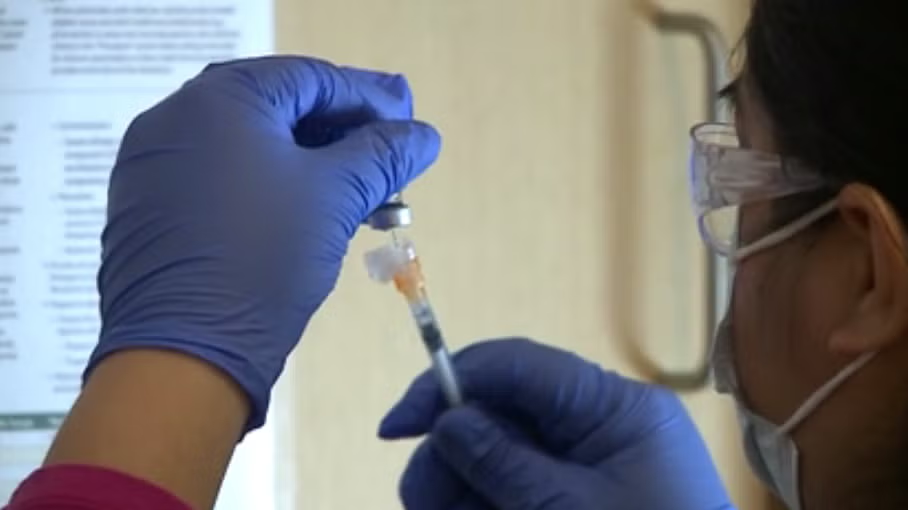
Carter Lake Community Center hosts vaccine clinic today for flu, COVID-19 and more

The Carter Lake Community Center is hosting a vaccine clinic today with shots for flu, COVID-19, RSV and more.

ketv11/13/2026

Nearly half of U.S. weight-loss drug users are changing how they take them, CDC finds

Skipping doses was the most common change at 28%, and 38% of users who made changes cited cost, according to the CDC

quartz11/13/2026

Breast implant maker tries new push to find patients one year after cancer related recall

WASHINGTON (SBG) — One year after voluntarily recalling textured breast implants shown to have a potential link to cancer, Allergan is making a new push to track down thousands of women who may not be aware of the risk. Caption: Joce Sterman and Alex Brauer/Sinclair Broadcast Group. For years, Raylene Hollrah has been sounding the alarm about a rare type of cancer linked to breast implants. It's called breast implant-associated anaplastic large cell lymphoma, or BIA-ALCL. “Women need to know.

idahonews11/13/2026

Grandad sues Ozempic makers after claims medication 'left him partially blind'

Jay Vandegriff has been left with just 33% vision in one eye after his vision suddenly deteriorated

devonlive11/13/2026
← PreviousNext →
Read article
indianexpress11/13/2026

‘Nick Jonas found our sev delight with imli chutney spicy’: Goa restaurant owner recalls Priyanka Chopra’s visit

Read article
pharmacy_biz11/13/2026

New social care plan aims to end the revolving door of care

People receiving care at home are hoped to benefit from more consistent and personalised support under government plans to re-organise social care around local communities. The Department of Health and Social Care (DHSC) has announced that local authorities will be encouraged to commission home care across small geographical areas, with one or two main providers serving each neighbourhood. The move aims to help people see the same care workers more regularly, to build stronger relationships and reduce the time workers spend travelling between appointments. Guidance and toolkits will be published in Spring 2027 to help local authorities adopt neighbourhood-based models of home care commissioning. The government will also work with local councils over the coming months to monitor and support their progress. Improving continuity with personalised care Under the current system, people receiving support a likely to be visited by different carers on different days, while care workers spend significant time commuting between appointments, often described as a "revolving door" of carers. The proposed neighbourhood model will allow care workers to operate within smaller geographical areas, with more predictable rounds closer to home. For patients, this will provide opportunities with familiar carers to prioritise their needs and identify changes in their wellbeing. Research in 2024 by the Health Innovation Network South West into care rounds across six providers in Bristol, found that reorganising existing visits into geographical zones could potentially deliver the same level of care with 35% less staff and 5% less driving. Part of wider National Care Service plans Alison McGovern, Minister of State for Social Care and Mental Health, said: “We have a growing, ageing population and an NHS facing significant pressures. Our National Care Service is the answer, and neighbourhood commissioning is a step towards this”. She said the approach would help people stay well, independent and at home for longer, while enabling care workers to spend more time providing for their needs and priorities, rather than rushing from visit to visit and carrying out tasks in an impersonal way. Better home care could reduce unnecessary hospital visits, with social care working more closely with the NHS to deliver proactive, planned and preventative support within communities, McGovern added. The announcement forms part of the government’s 10 Year Health Plan, which will bring GPs, local authorities, social care providers, volunteers and enterprise organisations together to deliver more integrated health and care services. This follows the announcement made by the Secretary of State on additional funding of £40 million for GPs this winter to support around 300,000 vulnerable patients, helping prevent serious illness, avoid hospital admissions and provide additional support to patients at more risk. In September, Prime Minister Andy Burnham announced plans for a fully funded National Care Service (NCS) to be established in the next Parliament. In the shorter term, the government is making an additional £4.6 billion available to local authorities in 2028-29 compared to 2025-26. It is also establishing the first Fair Pay Agreement for care workers and developing an adult social care workforce plan. Baroness Casey’s review on adult social care has been brought forward by a year to help establish the National Care Service. Following her recommendations, the government has held a safeguarding board for developing fast-track care for people with motor neurone disease and will appoint a dementia tsar. Home care organisations welcomed the plans Dr Jane Townson OBE, Chief Executive of the Homecare Association, welcomed the move, saying that neighbourhood commissioning reflected the organisation's long-standing position that commissioning was central to quality, fair working conditions and better outcomes. However, she stressed that successful implementation would require fees to cover cost of care and payments for complete care rounds and emphasised that people must retain a genuine choice over who provides their support. Caroline Abrahams CBE, Emily Holzhausen CBE and Jackie O’Sullivan, Co-Chairs of the Care and Support Alliance, said neighbourhood-level commissioning could improve coordination between health and social care for older and disabled people. They also stressed how strong relationships between patients and carers are central to good quality care. Phil Holmes, President of the Association of Directors of Adult Social Services (ADASS), said: “We support efforts to improve continuity of care because relationships matter to carers and those who draw on care and support”. “By making the best use of neighbourhoods and local communities, we can help more people see familiar carers who understand their needs and can spot any changes early”. “This is about moving away from a system defined by time and task, where too many people see a succession of strangers at the door, and towards one built on trust and personalised support”, he added.

Read article
thisdaylive11/13/2026

Index Ebola Case: Swiss Diplomat’s Wife Recovers, Discharged from Hospital

Onyebuchi Ezigbo in Abuja Nigeria Centre for Disease Control and Prevention (NCDC) has said that the Nigeria’s Ebola index case- Swiss diplomat’s wife has recovered and discharged from hospital in

Read article
bwhealthcareworld11/13/2026

Covid Vaccination’s Association With Increase In Menstrual Cycle Length: Study - BW Healthcare World

COVID-19 shorts are related to an average increase in menstrual cycle length of less than one day, said a study by researchers from Oregon Health & Science University which was published in the British Medical Journal. The researchers found a 0.71 day increase after the first vaccine dose and a 0.56 day increase after the second shot, whereas women who took both doses in a single cycle experienced a 3.91 day increase in cycle length. The researchers noted that changes in cycle length did not vary concerning the kind of vaccine taken. Moreover, an alteration in cycle length of fewer than eight days is considered within the normal range of variation, they added. After vaccination, cycle length had increased by only 0.02 days for individuals who received one dose per cycle and by 0.85 days for those who received both doses in one cycle, compared to participants who had not been vaccinated. Even as the minute menstrual changes may not be meaningful to health care professionals and researchers, the perceived alteration in a bodily function associated with fertility might seem alarming to those experiencing it, which might lead to their vaccine hesitancy, noted the study authors. Overall, 19,622 individuals participated in the large, international study, out of which 14,936 were vaccinated and 4,686 were not. The researchers examined data on at least three successive cycles before vaccination and at least one cycle after. Data from at least four consecutive cycles was examined for a similar span of time for unvaccinated participants. Out of the total participants, 1,342 experienced variations in cycle length of eight or more days, comprising 6.2 per cent of vaccinated individuals and 5 per cent of unvaccinated individuals. Younger women with longer cycle lengths before vaccination were found to be more likely to experience an increase in cycle length. The fertility tracking app, Natural Cycles, was used by researchers to analyse de-identified data. Users of the app provided information on their temperatures and their menstrual cycles. The worldwide rollout of COVID-19 vaccines allowed the study authors to expand on their original study of people in the US.The study comprised data from participants throughout the world, but mainly from the UK (32 per cent), the US and Canada (29 per cent) and Europe (34 per cent). Apart from the messenger RNA Covid-19 vaccines (Pfizer-BioNTech and Moderna), participants received vaccines made from engineered viruses (AstraZeneca, Covishield, Johnson & Johnson, and Sputnik), and inactivated viruses (Covaxin, Sinopharm, and Sinovac).

Read article
bd24live11/13/2026

Diabetes Risk Can Be Significantly Reduced Through Preventive Measures: Prime Minister

Prime Minister Tareque Rahman stated that increasing awareness about diabetes and adopting preventive measures can significantly reduce the risk and complications of the disease. He said that even individuals with… The post Diabetes Risk Can Be Significantly Reduced Through Preventive Measures: Prime Minister appeared first on Bangla Online News Portal.

Read article
ketv11/13/2026

Carter Lake Community Center hosts vaccine clinic today for flu, COVID-19 and more

The Carter Lake Community Center is hosting a vaccine clinic today with shots for flu, COVID-19, RSV and more.

Read article
quartz11/13/2026

Nearly half of U.S. weight-loss drug users are changing how they take them, CDC finds

Skipping doses was the most common change at 28%, and 38% of users who made changes cited cost, according to the CDC

Read article
idahonews11/13/2026

Breast implant maker tries new push to find patients one year after cancer related recall

WASHINGTON (SBG) — One year after voluntarily recalling textured breast implants shown to have a potential link to cancer, Allergan is making a new push to track down thousands of women who may not be aware of the risk. Caption: Joce Sterman and Alex Brauer/Sinclair Broadcast Group. For years, Raylene Hollrah has been sounding the alarm about a rare type of cancer linked to breast implants. It's called breast implant-associated anaplastic large cell lymphoma, or BIA-ALCL. “Women need to know.

Read article
devonlive11/13/2026

Grandad sues Ozempic makers after claims medication 'left him partially blind'

Jay Vandegriff has been left with just 33% vision in one eye after his vision suddenly deteriorated

Read article