C
Care Gaps Leave Children With Preventable Heart Disease Undiagnosed - Mirage News
Care Gaps Leave Children With Preventable Heart Disease Undiagnosed Mirage News
google9/30/2026
Browse recent medication, recall, and health-related stories.
Page 11 of 51
Care Gaps Leave Children With Preventable Heart Disease Undiagnosed Mirage News

Smoking inactivity and obesity linked to growing heart risks among younger Pakistanis says NICVD expert

Hand, foot and mouth disease cases surged among Korean toddlers this summer, with treatment costs rising tenfold in four years to 37 billion won.

The Sickle Cell Foundation Nigeria has called for the country to lead in developing home-grown solutions to the disease at the launch of a new global partn Read More: https://punchng.com/nigeria-should-drive-home-grown-sickle-cell-solutions-foundation/

Cinco países y territorios son reconocidos por avances en la eliminación de enfermedades en las Américas Cristina Mitchell 29 Sep 2026

GLP-1s seem to be quickly becoming the “wonder drug” of the 21st century.
September is Blood Cancer Awareness Month. This year alone, nearly 68,000 people in the U.S. will be diagnosed with leukemia. Mayo Clinic hematologist and oncologist Dr. Cecilia Arana Yi says treatment is changing, and it’s giving patients more options.
Body: FDA’s Center for Drug Evaluation and Research is looking to artificial intelligence to help preserve institutional knowledge as the agency continues rebuilding a workforce depleted by steep staffing losses over the past year, CDER Director Mike Davis said Tuesday (Sept. 29). Davis said AI could help newer employees query FDA’s previous work and better understand the regulatory reasoning behind earlier decisions as experienced reviewers retire or leave the agency -- potentially addressing one of the less visible consequences of the agency’s workforce losses. “AI can also be used as a tool for addressing the issue of institutional knowledge,” Davis said during a Consumer Healthcare Products Association conference Tuesday. “So, when very experienced people ... retire or move on, using [AI] as a tool to sort of query FDA’s prior work and really look at precedents, and not to necessarily say we’re going to do what we’ve always done, but to really look at it and understand the thinking and sort of provide context for new work.” The comments come as CDER and the agency more broadly continue trying to rebuild their workforce following sweeping cuts during the first year of the Trump administration. FDA staffing fell by more than 20% between the end of fiscal 2024 and May 2026, according to a recent Trust for America’s Health analysis. Davis on Tuesday called staffing “probably my top organizational priority” and said attrition within CDER has slowed to levels more consistent with historical trends. “Obviously we’re continuing to actively recruit, and we’re looking at the workforce we have practically,” Davis said. “Where are the pressure points? Where do we need specialized expertise?” Staffing concerns have become a recurring concern for FDA stakeholders, particularly for drug and medical device manufacturers that depend on the agency to review applications and provide timely regulatory feedback. During recent negotiations over medical device , generic and prescription drug user fee programs, manufacturers questioned whether FDA has enough experienced personnel to keep up with existing review timelines while carrying out new regulatory initiatives. “There's obviously been change in the last year,” Davis said. “What's really made CDER strong over the years remains consistent, and it's our people; it's our commitment to protect and promote public health through both high-quality science and regulatory decision making.” In the interim, Davis said the agency is trying to make better use of the staff it has by using Elsa, the agency’s generative AI chatbot, to reduce the amount of time highly trained scientists and reviewers spend on “repetitive and administrative work,” including things like document summarization, information retrieval, processing certain data sets, and identifying “grossly deficient submissions we receive.” “The vast majority of people (at CDER) are using [AI] in some capacity in their work,” Davis said. “And that allows [staff] to really operate at their highest capacity -- really thinking about substantive scientific regulatory questions.” FDA has increasingly incorporated AI across its regulatory operations over the past year, including in clinical trial review , generic drug quality oversight and inspection targeting . But, consistent with his colleagues, Davis repeatedly stressed that CDER does not view AI as a substitute for scientific expertise or regulatory judgment. “The human clinical and regulatory judgment is really critical for making these decisions,” Davis said. “And so we internally we talk about expert in the loop and the importance of verifying content because of just the risk of hallucinations and so forth.” Earlier this year, FDA hired a new deputy commissioner for technology and artificial intelligence , Jared Seehafer, to oversee the agency’s work on technology, software and AI. Davis also pointed to CDER’s “AI Council” -- established in 2024 -- meant to oversee AI initiatives across the center, with the goal of increasing transparency, sharing ideas and best practices, and “promoting consistency across both internal and external AI-related activities.” “This council also engages with FDA-wide AI infrastructure,” Davis said. “Within the CDER AI Council, we have established an AI review rapid response team, and this provides timely technical expertise on questions related to AI in the drug development lifecycle and supports reviewers of applications that contain AI components.” -- James Jarvis ( jjarvis@iwpnews.com )

Northern Nevada Public Health is warning residents of recalled cheese linked to E. coli.
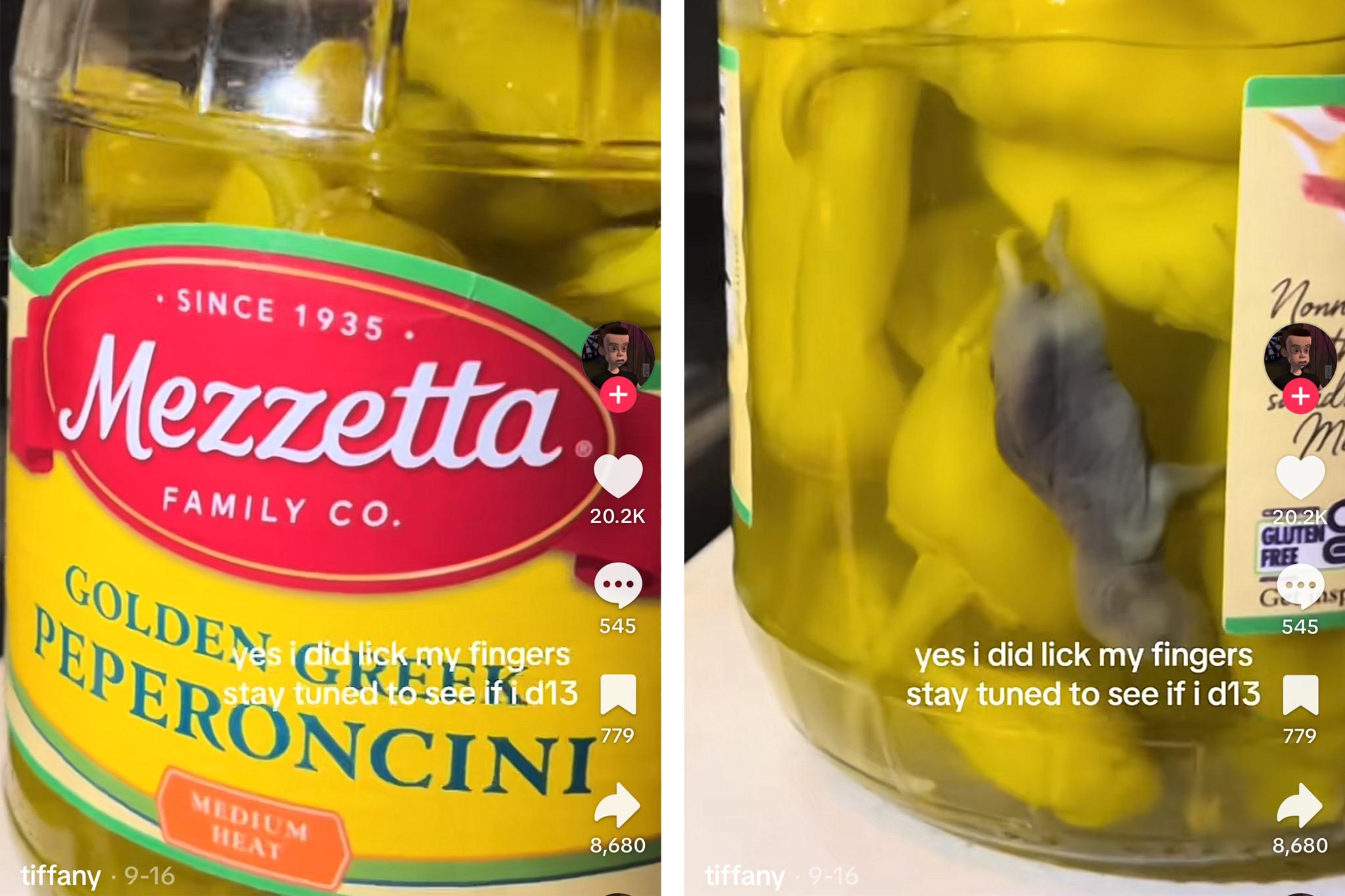
"Don't buy this brand of peperoncini. I have a dead mouse in mine."
The Sickle Cell Foundation Nigeria has called for the country to lead in developing home-grown solutions to the disease at the launch of a new global partn Read More: https://punchng.com/nigeria-should-drive-home-grown-sickle-cell-solutions-foundation/
September is Blood Cancer Awareness Month. This year alone, nearly 68,000 people in the U.S. will be diagnosed with leukemia. Mayo Clinic hematologist and oncologist Dr. Cecilia Arana Yi says treatment is changing, and it’s giving patients more options.
Body: FDA’s Center for Drug Evaluation and Research is looking to artificial intelligence to help preserve institutional knowledge as the agency continues rebuilding a workforce depleted by steep staffing losses over the past year, CDER Director Mike Davis said Tuesday (Sept. 29). Davis said AI could help newer employees query FDA’s previous work and better understand the regulatory reasoning behind earlier decisions as experienced reviewers retire or leave the agency -- potentially addressing one of the less visible consequences of the agency’s workforce losses. “AI can also be used as a tool for addressing the issue of institutional knowledge,” Davis said during a Consumer Healthcare Products Association conference Tuesday. “So, when very experienced people ... retire or move on, using [AI] as a tool to sort of query FDA’s prior work and really look at precedents, and not to necessarily say we’re going to do what we’ve always done, but to really look at it and understand the thinking and sort of provide context for new work.” The comments come as CDER and the agency more broadly continue trying to rebuild their workforce following sweeping cuts during the first year of the Trump administration. FDA staffing fell by more than 20% between the end of fiscal 2024 and May 2026, according to a recent Trust for America’s Health analysis. Davis on Tuesday called staffing “probably my top organizational priority” and said attrition within CDER has slowed to levels more consistent with historical trends. “Obviously we’re continuing to actively recruit, and we’re looking at the workforce we have practically,” Davis said. “Where are the pressure points? Where do we need specialized expertise?” Staffing concerns have become a recurring concern for FDA stakeholders, particularly for drug and medical device manufacturers that depend on the agency to review applications and provide timely regulatory feedback. During recent negotiations over medical device , generic and prescription drug user fee programs, manufacturers questioned whether FDA has enough experienced personnel to keep up with existing review timelines while carrying out new regulatory initiatives. “There's obviously been change in the last year,” Davis said. “What's really made CDER strong over the years remains consistent, and it's our people; it's our commitment to protect and promote public health through both high-quality science and regulatory decision making.” In the interim, Davis said the agency is trying to make better use of the staff it has by using Elsa, the agency’s generative AI chatbot, to reduce the amount of time highly trained scientists and reviewers spend on “repetitive and administrative work,” including things like document summarization, information retrieval, processing certain data sets, and identifying “grossly deficient submissions we receive.” “The vast majority of people (at CDER) are using [AI] in some capacity in their work,” Davis said. “And that allows [staff] to really operate at their highest capacity -- really thinking about substantive scientific regulatory questions.” FDA has increasingly incorporated AI across its regulatory operations over the past year, including in clinical trial review , generic drug quality oversight and inspection targeting . But, consistent with his colleagues, Davis repeatedly stressed that CDER does not view AI as a substitute for scientific expertise or regulatory judgment. “The human clinical and regulatory judgment is really critical for making these decisions,” Davis said. “And so we internally we talk about expert in the loop and the importance of verifying content because of just the risk of hallucinations and so forth.” Earlier this year, FDA hired a new deputy commissioner for technology and artificial intelligence , Jared Seehafer, to oversee the agency’s work on technology, software and AI. Davis also pointed to CDER’s “AI Council” -- established in 2024 -- meant to oversee AI initiatives across the center, with the goal of increasing transparency, sharing ideas and best practices, and “promoting consistency across both internal and external AI-related activities.” “This council also engages with FDA-wide AI infrastructure,” Davis said. “Within the CDER AI Council, we have established an AI review rapid response team, and this provides timely technical expertise on questions related to AI in the drug development lifecycle and supports reviewers of applications that contain AI components.” -- James Jarvis ( jjarvis@iwpnews.com )